Vein Health Melbourne serving Regional Victoria

Originally established in Box Hill in Melbourne’s Eastern Suburbs – we moved our clinic to Melbourne’s CBD, in part to provide easier access to patients across Victoria’s regional centres. 

We acknowledge that some regional areas have limited access to medical professionals with expertise in venous disease and non-surgical vein treatments. This lack of access can often lead to worsening symptoms for patients and a decrease in lifestyle. At Vein Health Medical clinic we welcome all enquiries from venous disease sufferers across Victoria. 

Dr. Peter Paraskevas

Phlebologist &
Medical Director

About the Clinic

Vein Health Medical Clinic has provided expert treatment of varicose veins, spider veins, and venous disease for over 20 years. We offer the latest non-surgical treatments for proven relief, delivered in a relaxed, friendly, and professional clinic environment.

Established by phlebologist Dr Peter Paraskevas, Vein Health is committed to providing our patients with the highest level of care and varicose vein treatment in Victoria. Dr Peter is heavily involved in educating other doctors in the field, and has provided seminars to GPs in regional areas.

What’s a phlebologist? A phlebologist is a medically qualified doctor who has undergone dedicated training to expertly diagnose, treat and where possible, prevent any form of venous disease.


Getting to the Clinic

Our clinic is situated within Collins Place at 45 Collins Street Melbourne.

This central location makes it easily accessible from regional areas, no matter your desired mode of transport.

For public transport, you can hop on your local V/line train or bus service taking you to Southern Cross Station. From there catch the FREE number 11 tram straight down Collins street to our doorstep.

If you’d prefer to drive. There is ample off-street parking available nearby.

For any questions regarding getting here – please ask us! 
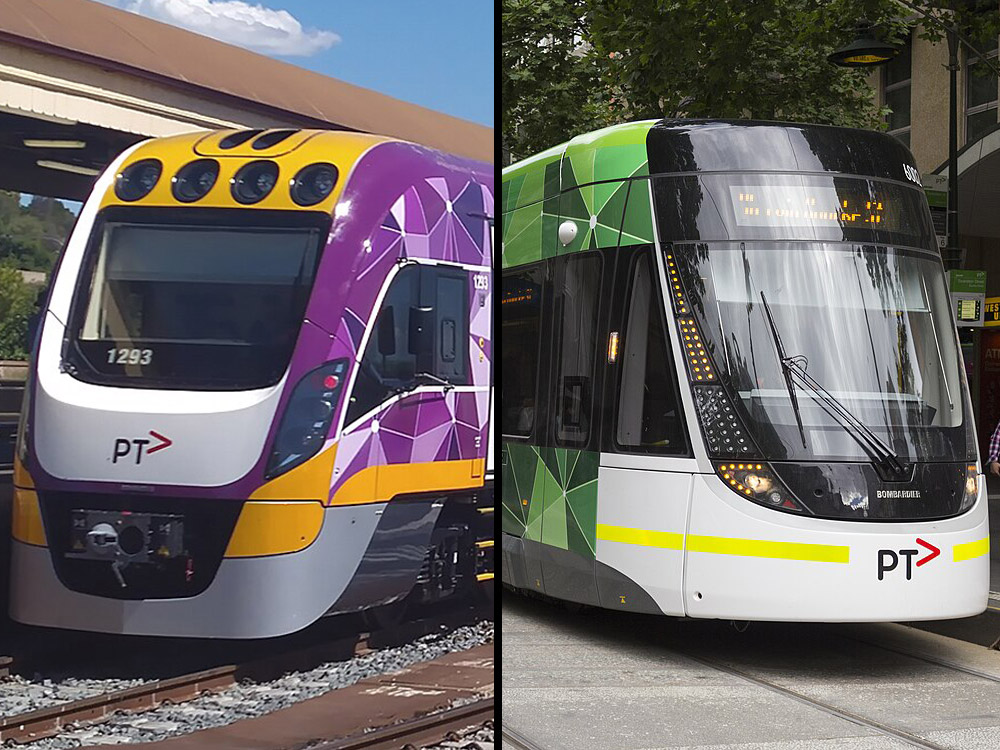
 

A purple train and a green tram, both marked with the PT logo, are shown side by side in outdoor urban settings—perfect imagery for a regional campaign landing page.

Let’s look at those legs!

If you’re ready to do something about your troublesome leg veins – here’s how you can get started with Vein Health.

Get your Comprehensive Vein Assessment

This is a thorough, 60 – 90 minute appointment designed to give you full clarity about the health of your leg veins.

What’s included:

  • Clinical examination of your varicose veins – to understand what you’re experiencing and where
  • Duplex ultrasound scan – to determine the root cause of your condition, under the surface.
  • Consultation with Dr Peter – to review all the findings with you, with time for your questions, and answers in plain language.
  • Personalised treatment plan – where you’ll receive a recommended approach to treatment of your leg veins, with full costing and applicable Medicare Rebates.

This initial appointment is just $215* after Medicare Rebates
*Out-of-pocket costs will be confirmed at time of booking

To book your comprehensive vein assessment – Contact us today!


The vein conditions we treat
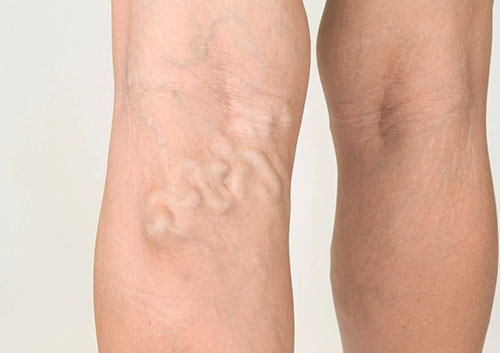
Leg with Varicose Veins

Varicose Veins

These are large, dilated, ropey leg veins that bulge above the skin surface, and are usually blue or green in colour. They no longer serve the primary function of veins, which is to return blood to the heart. Varicose veins can occur alone or may be accompanied by symptoms of severe venous disease
Read more about Varicose Veins

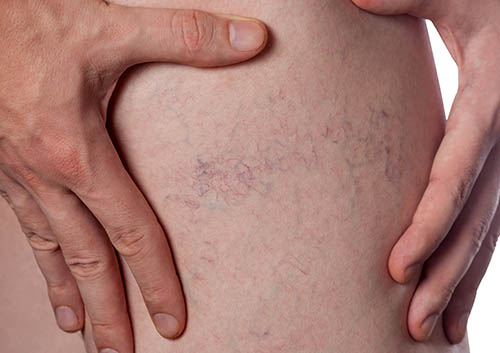
Leg displaying Spider Veins

Spider Veins

Spider veins (or telangiectasias) are the tiny red or blue veins that can appear anywhere on the body, but more often on the legs, ankles, face, chest, or abdomen. Spider veins are extremely common and usually appear with larger dilated blood vessels (often blue / green in colour) called reticular veins
More on Spider Veins & Reticular Veins

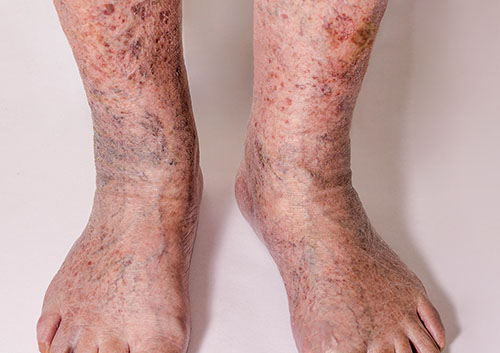
Foot displaying chronic venous disease from severe varicose veins

Severe Venous Disease

If varicose veins are left untreated, severe venous disease may occur. This condition may have signs such as eczema and swelling in the leg. Or, the skin around the lower leg may become discoloured, thickened or even ulcerated.As well as this, patients can experience heaviness, aching and tiredness in the leg.

More on Severe Venous Disease

What to expect

Learn all about your first appointment, what's included, and how much it will cost.
Find out more

Patient Before & Afters

Patient
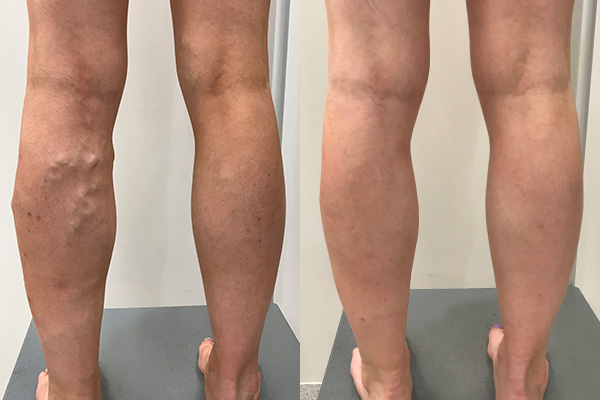
29-year-old woman

The Problem
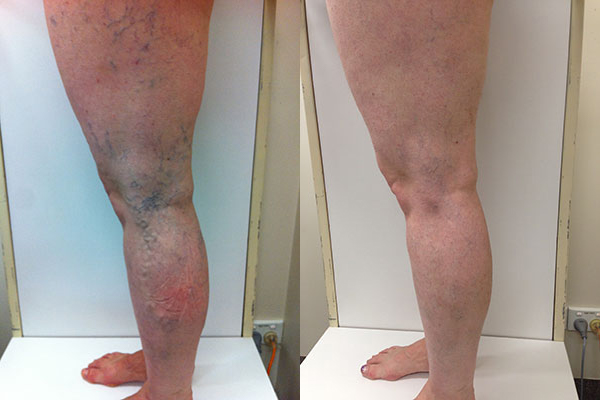
Varicose veins predominantly in the left lower leg but also in the right lower leg, causing heaviness, aching, and swelling in the legs.

Treatment Method
Endovenous Laser Ablation, Ultrasound Guided Sclerotherapy, and Modified Phlebectomy

Results
All symptoms have resolved, and her legs feel and look healthier. Post-treatment photos were taken 12 months post-treatment.

Patient
29-year-old woman

The Problem
Varicose veins predominantly in the left lower leg but also in the right lower leg, causing heaviness, aching, and swelling in the legs.

Treatment Method
Endovenous Laser Ablation, Ultrasound Guided Sclerotherapy, and Modified Phlebectomy

Results
All symptoms have resolved, and her legs feel and look healthier. Post-treatment photos were taken 12 months post-treatment.

Patient
66-year-old woman

The Problem
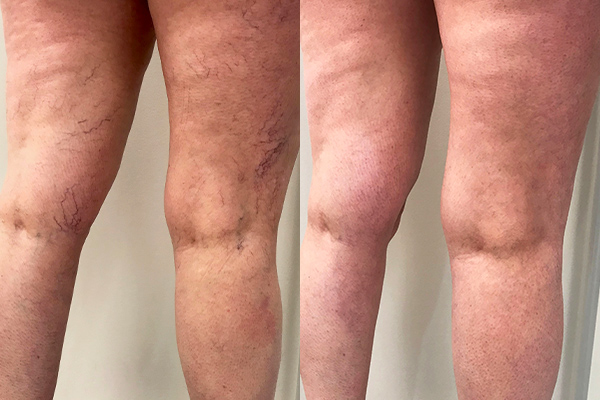
Prominent left lower leg capillary clusters with heaviness and tiredness in the leg.

The patient received treatment elsewhere using surface sclerotherapy alone and she noticed the veins were worse afterward. She was never given an ultrasound to check for underlying varicose veins that could be feeding it. Patients should always receive a diagnostic duplex ultrasound to rule out abnormal veins that may be feeding surface veins.

Treatment Method
A duplex ultrasound revealed an underlying great saphenous vein feeding the surface veins. The great saphenous vein was treated using Endovenous Laser Ablation and surface veins were treated with Ultrasound-Guided and Direct Vision Sclerotherapy.

Results
Results at 13 months show the surface and saphenous veins have been permanently treated. The patient was extremely satisfied with her results.

Patient
75-year-old woman

The Problem
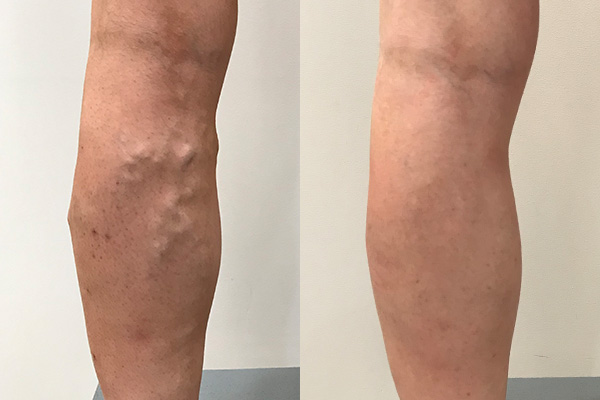
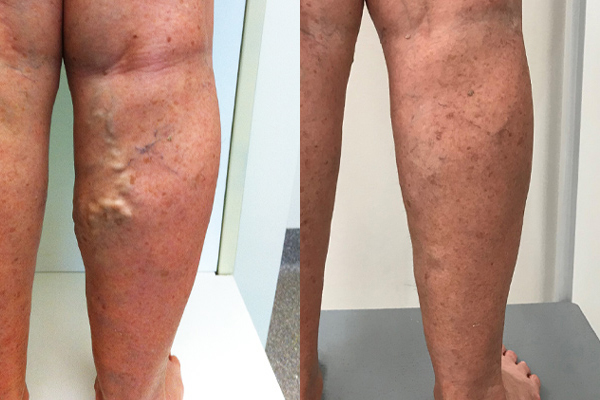
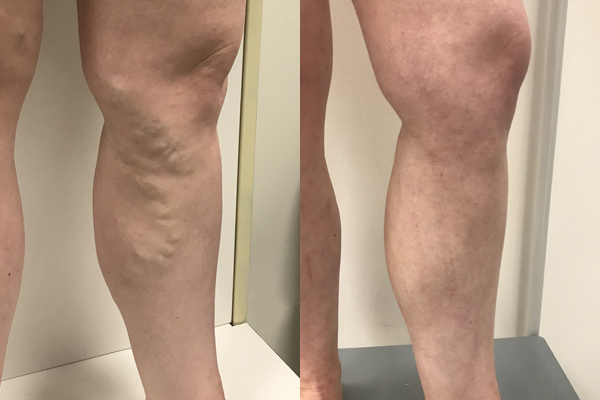
Longstanding calf veins with swelling. Symptoms: heaviness, discomfort, restless legs, tiredness, and lower leg fatigue.

Treatment Method
Endovenous Laser Ablation and Ambulatory Phlebectomy

Results
Reviewed during the last 5 years, this recent photo illustrates the resolution of varicose veins and swelling/congestion. She reports no symptoms and is satisfied with her results.

Patient
56-year-old woman

The Patient
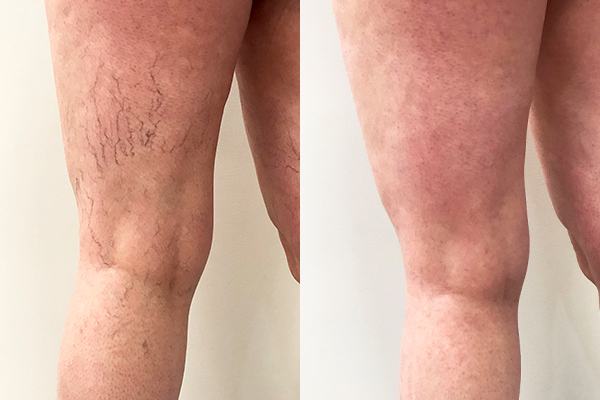
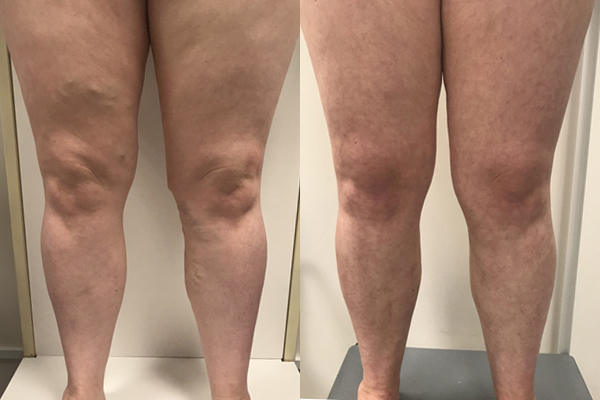
Prominent spider vein networks and underlying feeder veins on the back and sides of the thighs.

Treatment Method
Surface/Direct Vision Sclerotherapy

Results
12 months post-treatment shows the resolution of the visible spider veins and feeders. The patient is pleased with the result. She will continue to monitor her legs over the coming years and have a maintenance treatment as required.

Patient
56-year-old woman

The Patient
Prominent spider vein networks and underlying feeder veins on the back and sides of the thighs.

Treatment Method
Surface/Direct Vision Sclerotherapy

Results
12 months post-treatment shows the resolution of the visible spider veins and feeders. The patient is pleased with the result. She will continue to monitor her legs over the coming years and have a maintenance treatment as required.

Patient
40-year-old woman

The Problem
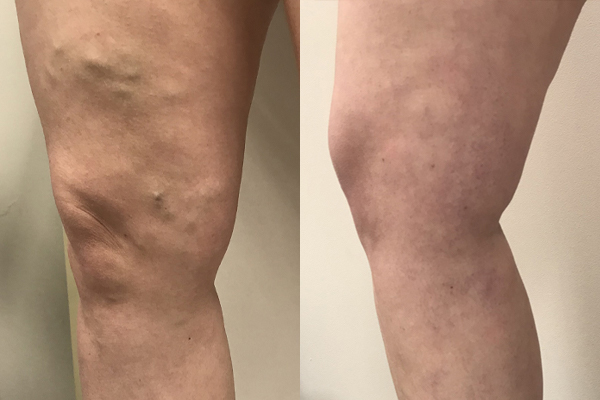
Worsening varicose vein symptoms following pregnancy.

Treatment Method
Endovenous Laser Ablation, Ambulatory Phlebectomy, and Ultrasound Guided Foam Sclerotherapy

Results
At 14 months post-treatment, there are no residual or recurrent veins according to scans.

Patient
40-year-old woman

The Problem
Worsening varicose vein symptoms following pregnancy.

Treatment Method
Endovenous Laser Ablation, Ambulatory Phlebectomy, and Ultrasound Guided Foam Sclerotherapy

Results
At 14 months post-treatment, there are no residual or recurrent veins according to scans.

Patient
40-year-old woman

The Problem
Worsening varicose vein symptoms following pregnancy.

Treatment Method
Endovenous Laser Ablation, Ambulatory Phlebectomy, and Ultrasound Guided Foam Sclerotherapy

Results
At 14 months post-treatment, there are no residual or recurrent veins according to scans.

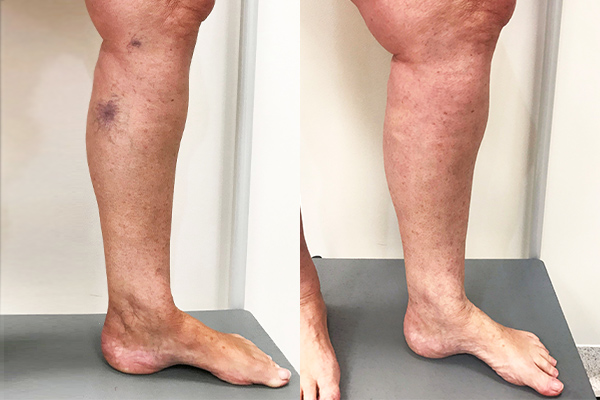
The Problem
Significant swelling, pigmentation, and corona phlebectasia (extensive capillaries in the ankle and foot, indicative of larger incompetent internal veins).

Treatment Method
Endovenous Laser Ablation and Ultrasound Guided Sclerotherapy.

Results
Complete resolution of her symptoms and also of the swelling, pigmentation and capillaries in her ankle.

Enquire now

Ready to book, or still have some questions?
Call (03) 9662 1863 or email us