By Dr Peter Paraskevas, Founder of Vein Health Medical Clinic
One of the things I love most about what I do is helping people understand what’s actually going on with their legs. So many patients come to me feeling confused, or even a little embarrassed, and they just want someone to explain things clearly and honestly.
So that’s exactly what I’m going to do here.
Whether you’ve noticed some fine red lines on your legs, some bulging veins that concern you, or you’re just curious about what’s normal and what isn’t, this guide is for you.
What types of veins do we see at Vein Health?
First, let’s talk about how common this actually is. Abnormal, dilated veins appearing on the legs affect up to 50% of the population at some point during their lifetime. So if you’re sitting there looking at your legs and feeling self-conscious, you are absolutely not alone.
There are three main types of abnormal leg veins, and I see them every single day in the clinic. They often appear together, which can make things feel a little confusing at first. Let me walk you through each one.
1. Spider Veins
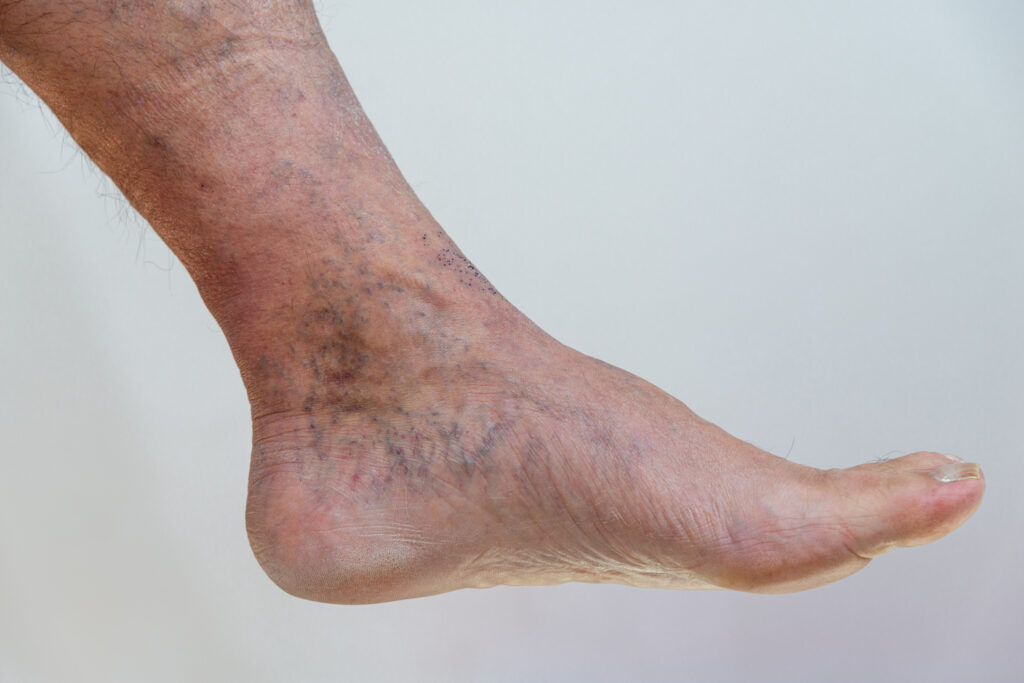
Spider veins (medically known as Telangiectasia ) are the finest and most superficial of the three. They appear as very fine red or blue capillaries on the surface of the skin, most commonly on the lower legs. They can look scattered and random, or they can cluster in specific areas.
2. Reticular Veins
(also called Feeder Veins or Subdermal Veins)
These are the bluish veins that sit just under the surface of the skin. You can often see them but not feel them. They’re sometimes called feeder veins because that’s exactly what they do. They feed the spider veins above them.
This is really important, and it’s something I want you to remember: if you only treat the spider veins on the surface without addressing the feeder veins underneath, the spider veins will come back. I see patients who’ve had treatment in the past and been frustrated that their veins returned. And more often than not, this is why.
3. Varicose Veins
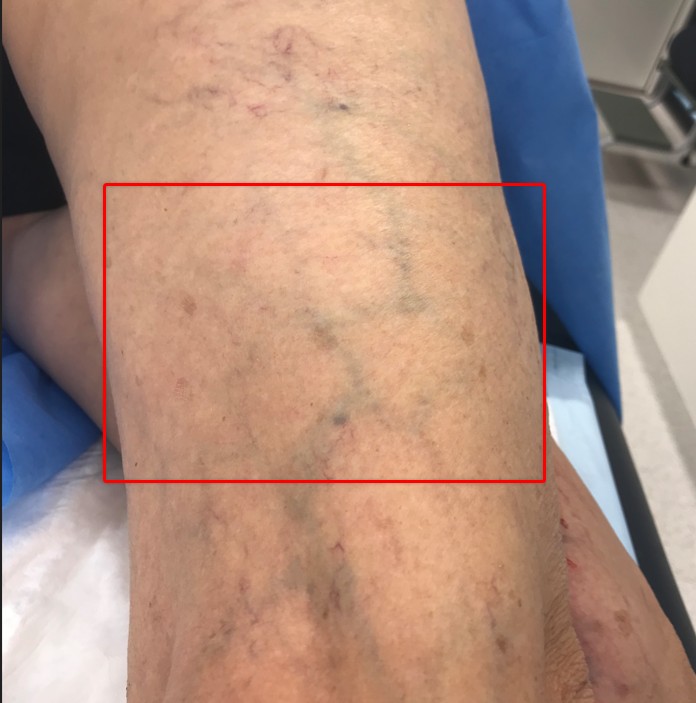
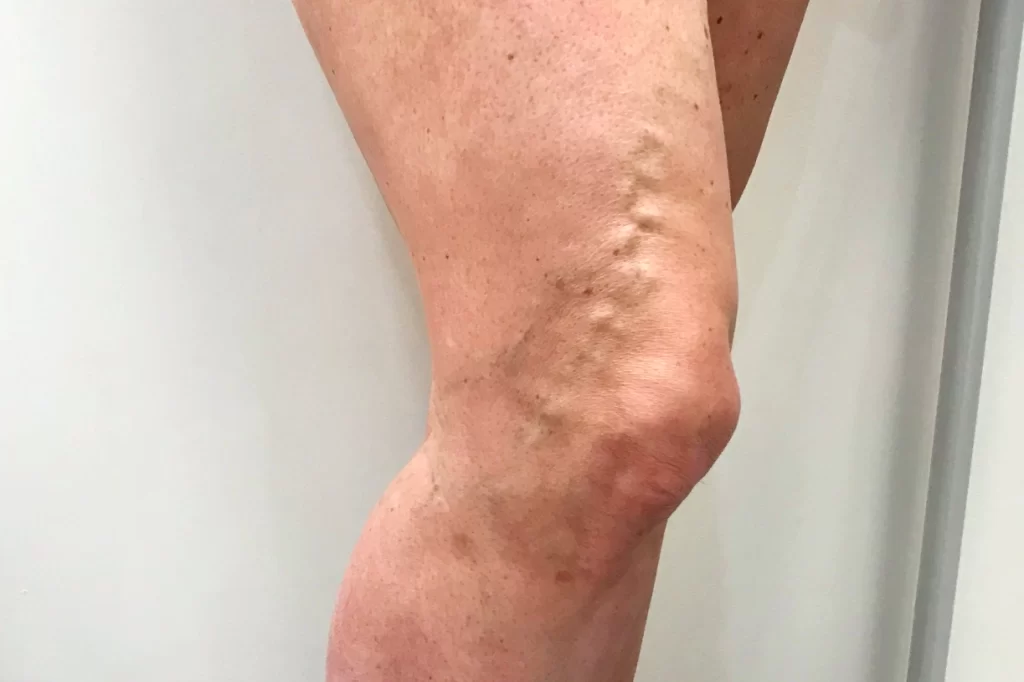
Varicose veins are the largest of the three. They’re the ones people typically describe as “bubbly” or “rope-like.” Some bulge above the skin surface and are easy to see, while others sit deeper within the fatty tissue or inside vein compartments. So they may not be as visible, but they’re still very much there.
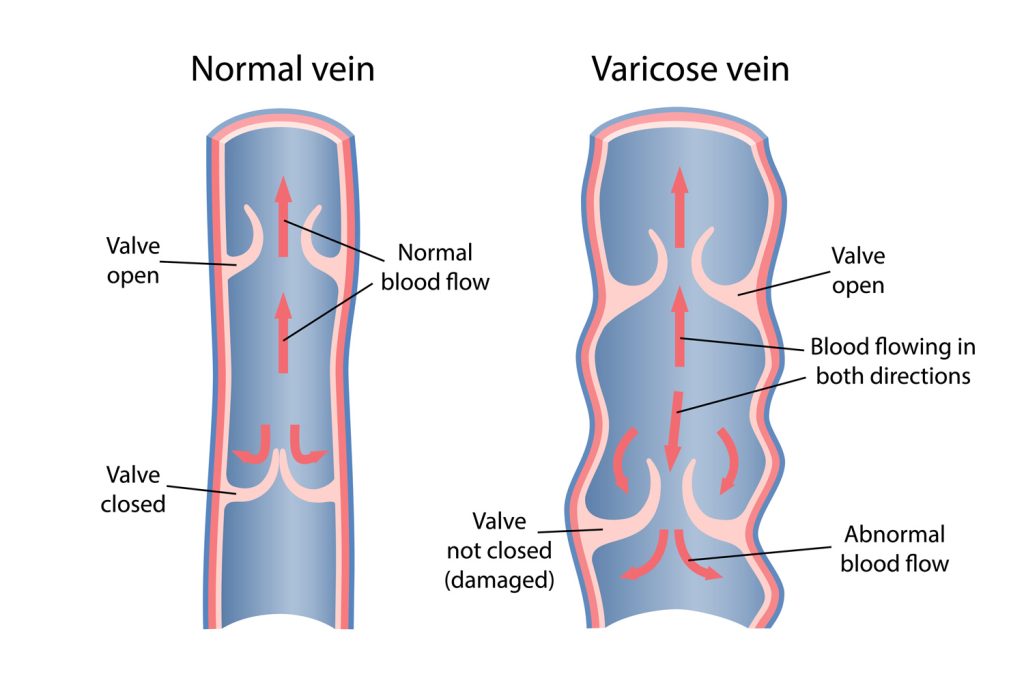
Here’s what’s happening underneath the surface:
Varicose veins have a weakness in the vein wall and a problem with their internal one-way valves. Those valves are critical for healthy vein function. They keep blood moving into the deep veins and upward toward the heart.
When they stop working properly, blood pools and the vein stretches and dilates over time. This is usually something people are born with a predisposition to, rather than something they’ve caused themselves.
What symptoms should you look out for?
Varicose veins aren’t always just a cosmetic concern. They can cause very real, daily discomfort. Symptoms I commonly hear from patients include:
- Heaviness or aching in the legs, especially at the end of the day
- Burning, stinging or throbbing
- Itchiness around the affected veins
- Swollen ankles
- Restless legs and night cramps
If you’re noticing any of the following, it may indicate that things are progressing and I’d encourage you not to wait:
- A skin rash around the lower leg or ankle
- Small blue veins appearing around the ankle
- Skin discolouration or darkening
- Ulcers or scarring
These signs often point to advancing venous disease, and the sooner it’s addressed, the better the outcome.
Do varicose veins really need to be treated?
This is one of the questions I get asked most often, and my honest answer is yes, in most cases they do.
Here’s the thing that I really want people to understand. Varicose veins and spider veins are unhealthy veins that no longer function correctly. They don’t serve a useful biological purpose. In fact, they actively work against you, placing extra burden on your deep veins and on the skin and soft tissue of your leg.
Once abnormal veins are treated, the blood can return to flowing through your healthy veins. The circulation improves. The skin health improves. And for most patients, their symptoms improve significantly too.
The good news? Modern treatments are minimally invasive. We’re talking walk-in, walk-out procedures. No general anaesthetic, no hospital stay, minimal downtime. The treatments available today are a world away from what was offered even 15-20 years ago.
Where do you start?
If anything in this guide has resonated with you, whether you’ve been noticing symptoms for a while or you’ve simply been wondering what those veins actually are, the best first step is always a proper assessment.
At Vein Health, our Comprehensive Vein Assessment includes a thorough examination, a full ultrasound scan, so we can see exactly what’s going on beneath the surface and give you a clear, honest picture of your situation.
A Message from Dr Peter
You’ll leave with real answers, a fully costed treatment plan, and absolutely no pressure to do anything with it. The next step is always yours to take.
Or feel free to call us on (03) 9662 1863
– Dr Peter Paraskevas Phlebologist & Founder, Vein Health Medical Clinic